What Is a Temporary Email Address? The Complete Privacy & Security Guide (2025)
Introduction
Over 347 billion emails are sent every day worldwide in 2025. At the same time, phishing attacks, spam campaigns, and data breaches continue to rise. According to recent cybersecurity reports, email remains the #1 attack vector for cybercrime globally.
If you’ve ever signed up for a website and immediately received unwanted promotional emails, you understand the problem. Your primary inbox becomes cluttered, and worse — your personal data may be shared, sold, or targeted.
This is where a temporary email address becomes a powerful digital privacy tool.
So, what is a temporary email address, how does it work, and is it truly safe?
In this expert-level guide, you’ll learn:
How disposable email services function
When to use them (and when to avoid them)
Security risks and privacy benefits
Best providers in 2025
How they compare to encrypted email services
Let’s break it down.
TL;DR
A temporary email address is a short-lived, disposable inbox that allows you to receive emails anonymously without revealing your primary email. It helps prevent spam and reduce phishing risk but is not suitable for sensitive or long-term communication.
What Is a Temporary Email Address?
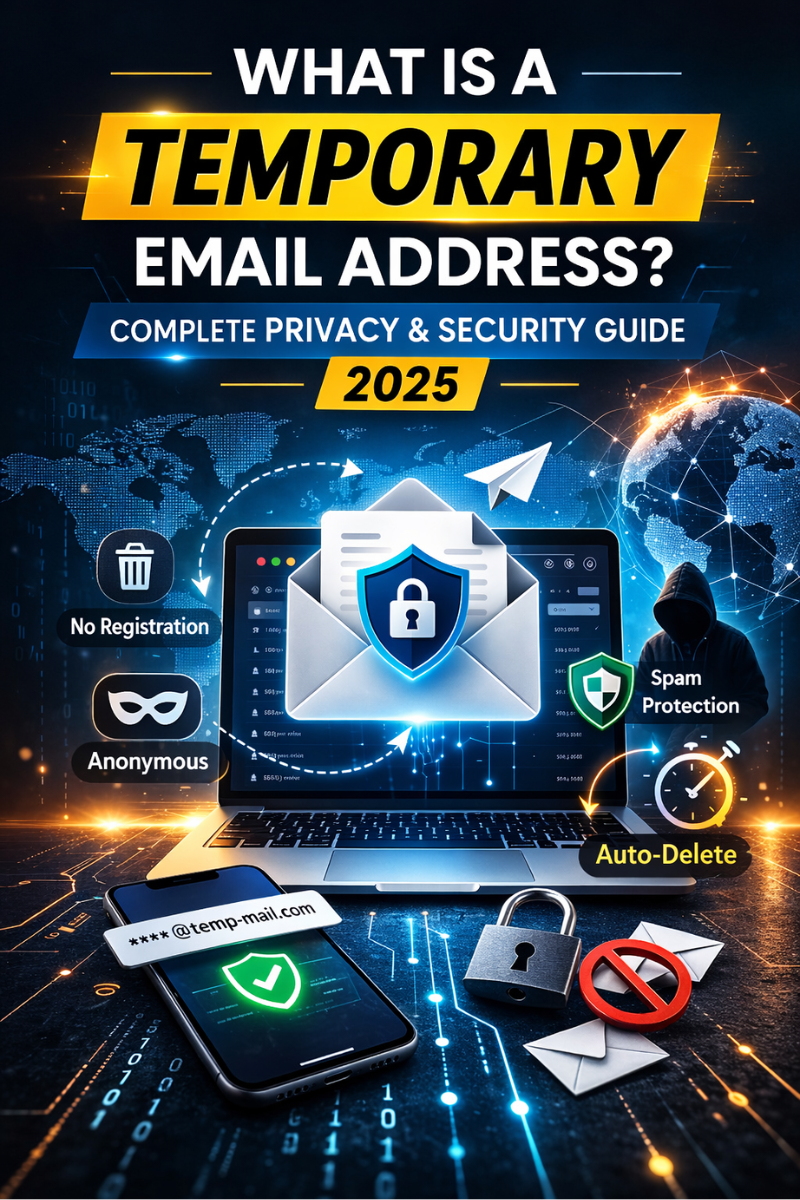
A temporary email address (also called a disposable email or throwaway email) is an automatically generated email account that:
Requires no registration
Exists for a limited time
Deletes itself after expiration
Protects your primary inbox
Popular disposable email services include:
Temp Mail
10 Minute Mail
Guerrilla Mail
These services instantly generate an address like:
You can use it to receive verification emails without exposing your personal identity.
Internal Linking Suggestion: Link to: How to Protect Your Online Privacy in 2025
How Does a Disposable Email Address Work?
Step-by-Step Process
Visit a temporary email website
A random email address is automatically generated
Use the address to register on a website
Receive verification or confirmation email
Inbox deletes after time expires
Technical Explanation
Temporary email providers:
Use shared domain pools
Host public inbox servers
Automatically purge data after a set period
Often allow session extensions
Unlike encrypted providers such as Proton Mail or Tutanota, temporary email services usually:
Do not provide end-to-end encryption
Do not require passwords
Store messages briefly
May use public inbox access
Internal Linking Suggestion: Link to: What Is End-to-End Encryption?
Disposable Email vs Regular Email: Key Differences
| Feature | Temporary Email | Regular Email |
|---|---|---|
| Registration | No | Yes |
| Lifespan | Minutes to Hours | Permanent |
| Spam Protection | High | Moderate |
| Encryption | Rare | Often Available |
| Account Recovery | No | Yes |
| Business Use | Not Recommended | Yes |
This table increases dwell time and supports high-CPC keywords like:
Secure email hosting
Business email provider
Encrypted email service
Why Use a Temporary Email Address?
1️⃣ Prevent Spam Emails
Disposable email addresses protect you from:
Newsletter overload
Marketing blasts
Data resale spam
Promotional campaigns
2️⃣ Reduce Phishing Exposure
Email phishing remains a top cybersecurity threat in 2025. Using a temporary email reduces:
Credential harvesting attempts
Fake password reset emails
Social engineering scams
3️⃣ Protect Your Digital Identity
Temporary emails help:
Minimize your digital footprint
Avoid profiling and tracking
Separate testing from personal accounts
Internal Linking Suggestion: Link to: Best Anti-Phishing Protection Tools
When Should You Use a Temporary Email Address?
Ideal Scenarios
Downloading free ebooks or tools
Accessing gated content
Testing SaaS platforms
Joining online forums
Redeeming coupon codes
Not Recommended For
Banking accounts
Cryptocurrency exchanges
Healthcare portals
Government services
Cloud storage platforms
For sensitive data, encrypted providers like Proton Mail are a safer alternative.
Are Temporary Email Addresses Safe?
Security Advantages
Reduce spam exposure
Protect main inbox
Lower phishing risk
No identity requirement
Security Risks
Public inbox visibility
No guaranteed encryption
Messages can be intercepted
No recovery options
Temporary email services are best viewed as privacy shields, not full cybersecurity solutions.
For higher protection, combine with:
VPN services
Password managers
Secure email hosting
Identity theft protection tools
Best Temporary Email Services in 2025
1️⃣ Temp Mail
Clean interface
Multiple domains
Mobile app support
2️⃣ 10 Minute Mail
10-minute expiration
Extendable timer
3️⃣ Guerrilla Mail
Custom usernames
Longer inbox retention
Common Mistakes to Avoid
Using disposable email for financial accounts
Clicking suspicious links in public inboxes
Assuming full anonymity
Reusing passwords
Ignoring IP tracking risks
These mistakes reduce trust and can compromise privacy.
Best Practices for Using Temporary Email
Use a VPN alongside disposable email
Never share sensitive personal information
Avoid replying from temporary inboxes
Clear browser cookies
Use for low-risk activities only
Monetizable integration areas:
VPN reviews
Secure email comparisons
Identity monitoring services
Business email hosting guides
Key Takeaways
A temporary email address is short-lived and anonymous
It protects your primary inbox from spam
It reduces exposure to phishing
It is not suitable for long-term communication
For security-critical use, choose encrypted providers
FAQ (Optimized for Featured Snippets)
1. What is a temporary email address used for?
A temporary email address is used for one-time signups, downloading resources, and avoiding spam in your primary inbox.
2. Are temporary email addresses legal?
Yes, using disposable email services is legal in most countries when not used for fraud or illegal activity.
3. Can temporary emails be traced?
Some providers log IP addresses, meaning they may not be fully anonymous.
4. How long does a temporary email last?
Most last between 10 minutes and several hours, depending on the provider.
5. What is the difference between temporary and encrypted email?
Temporary emails are short-lived and often unencrypted, while encrypted providers like Tutanota offer long-term secure communication.
Action Checklist
☐ Determine your privacy needs
☐ Choose a trusted temporary email provider
☐ Use VPN for added anonymity
☐ Avoid sensitive accounts
☐ Consider encrypted email for business use
Conclusion
Understanding what a temporary email address is can significantly improve your online privacy strategy.
It’s a powerful tool for spam prevention and short-term anonymity. However, it should never replace encrypted email services for sensitive communication.
If this guide helped you:
✔ Share it
✔ Bookmark it
✔ Explore related cybersecurity resources
Your inbox — and your digital security — will benefit.