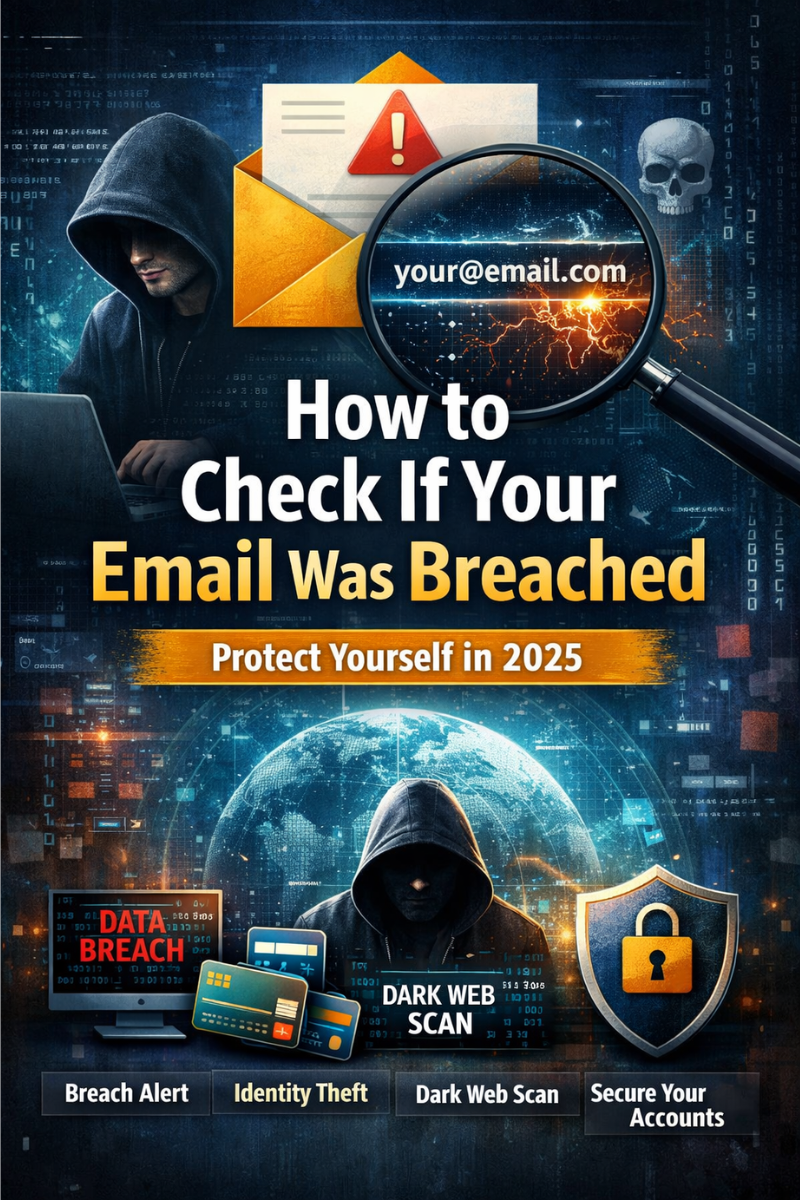
How to Check If Your Email Was Breached (And Protect Yourself in 2026)
Introduction
In 2024 alone, over 10 billion records were exposed in global data breaches, according to reports from IBM and Verizon.
If you’ve ever wondered, “Have I been hacked?” — you’re not alone.
Your email address is the gateway to:
Online banking
Cloud storage
Social media
Cryptocurrency wallets
Work accounts
When attackers gain access to it, the consequences can include identity theft, financial fraud, and long-term privacy damage.
In this complete 2025 guide, you’ll learn how to check if your email was breached, which tools are safe to use, and what to do immediately if your data appears in a leak.
TL;DR
Use a trusted email breach checker like Have I Been Pwned
Scan your email against known breach databases
Change passwords immediately if exposed
Enable multi-factor authentication (MFA)
Consider an identity theft protection service
What Does It Mean If Your Email Was Breached?
When your email appears in a data breach, it means:
A company you used suffered a security incident
Your email was exposed in leaked databases
Other data (passwords, phone numbers, addresses) may also be compromised
Cybercriminals often sell breached email lists on dark web marketplaces.
How to Use an Email Breach Checker (Step-by-Step)
email breach checker
The fastest way to check if your email was breached is by using a reputable data breach lookup tool.
Step-by-Step Guide
Visit a trusted platform like Have I Been Pwned
Enter your email address
Review listed breach incidents
Identify affected services
Take immediate action
Is It Safe to Enter Your Email?
Yes — if you use established platforms.
For example, Have I Been Pwned only checks against hashed databases and does not expose passwords publicly.
Avoid:
Unknown “free hacker tools”
Sites requesting passwords
Suspicious download prompts
How to Create a Strong Password in 2025
Best Data Breach Lookup Tools in 2025
data breach lookup tool
Here are trusted platforms widely used by cybersecurity professionals:
| Tool | Free Check | Dark Web Monitoring | Identity Protection | Best For |
|---|---|---|---|---|
| Have I Been Pwned | Yes | Limited | No | Quick checks |
| Experian | Partial | Yes | Yes | Credit monitoring |
| NortonLifeLock | No | Yes | Yes | Full identity protection |
| Aura | No | Yes | Yes | Families |
These tools offer:
Dark web scans
Identity theft insurance
Real-time breach alerts
High-CPC terms: identity theft protection service, credit monitoring subscription.
What To Do If Your Email Is Compromised
Check compromised email address
If your email appears in a breach:
Immediate Actions Checklist
Change your password immediately
Enable multi-factor authentication
Update passwords on other accounts
Monitor financial activity
Freeze credit if necessary
Why Password Reuse Is Dangerous
According to Google research, over 60% of users reuse passwords.
Attackers use “credential stuffing” tools to test leaked passwords across:
Banking platforms
Crypto exchanges
E-commerce stores
This is how small leaks become major financial losses.
How to Perform a Dark Web Email Scan
Dark web email scan
Dark web scans search underground forums where stolen data is sold.
Premium services like NortonLifeLock and Aura provide:
Real-time monitoring
Fraud alerts
Identity theft insurance
Signs Your Email May Have Been Hacked
Have I been hacked email
Watch for:
Unusual login alerts
Password reset emails you didn’t request
Sent messages you didn’t write
Locked accounts
Increased spam
If you see these signs, act immediately.
Common Mistakes People Make
Ignoring breach notifications
Reusing passwords
Not enabling MFA
Clicking phishing emails
Waiting too long to act
These mistakes increase exposure risk.
Best Practices for Email Security in 2025
Email security monitoring service
1. Use a Password Manager
Examples include 1Password and Bitwarden.
2. Enable Multi-Factor Authentication
Prefer app-based authenticators over SMS.
3. Subscribe to Identity Monitoring
Premium services provide fraud insurance and credit alerts.
4. Separate Financial Email Accounts
Use a dedicated email for banking and investments.
5. Monitor Breach Alerts Quarterly
Set reminders to check exposure.
Key Takeaways
Checking if your email was breached takes under 2 minutes
Use reputable tools only
Act immediately if exposed
Enable MFA everywhere
Consider identity theft monitoring
Action Checklist
✔ Run your email through a breach checker
✔ Change weak passwords
✔ Enable MFA
✔ Scan for malware
✔ Monitor bank accounts
✔ Consider a cybersecurity subscription
FAQ (Optimized for Featured Snippets)
1. How can I check if my email was breached for free?
Use Have I Been Pwned to scan your email against public breach databases.
2. Is it safe to use an email breach checker?
Yes, if you use reputable platforms that do not request passwords.
3. What happens if my email appears in a breach?
Your email was exposed in a leaked database. Change passwords immediately.
4. Can hackers access my bank account from my email?
If you reuse passwords or don’t use MFA, attackers may reset financial accounts.
5. How often should I check for breaches?
Every 3–6 months or after major news of a data breach.
Conclusion
Your email is your digital identity.
If you haven’t checked it recently, now is the time.
Take two minutes today to check if your email was breached, secure your accounts, and protect your financial future.
If this guide helped you:
Share it with friends
Bookmark it
Explore our related cybersecurity guides
Digital safety isn’t optional anymore — it’s essential.